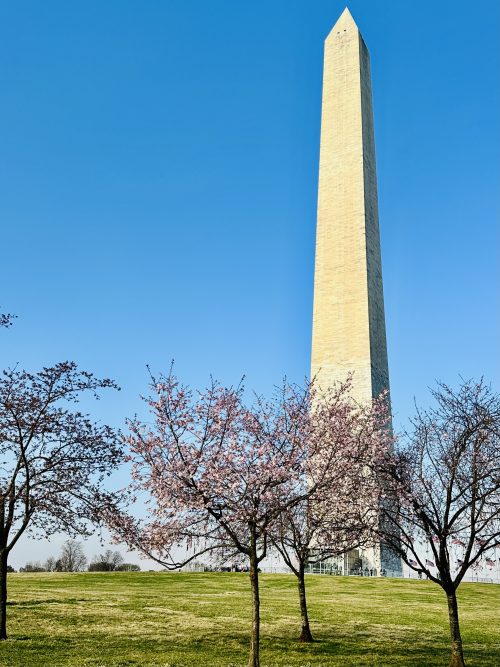
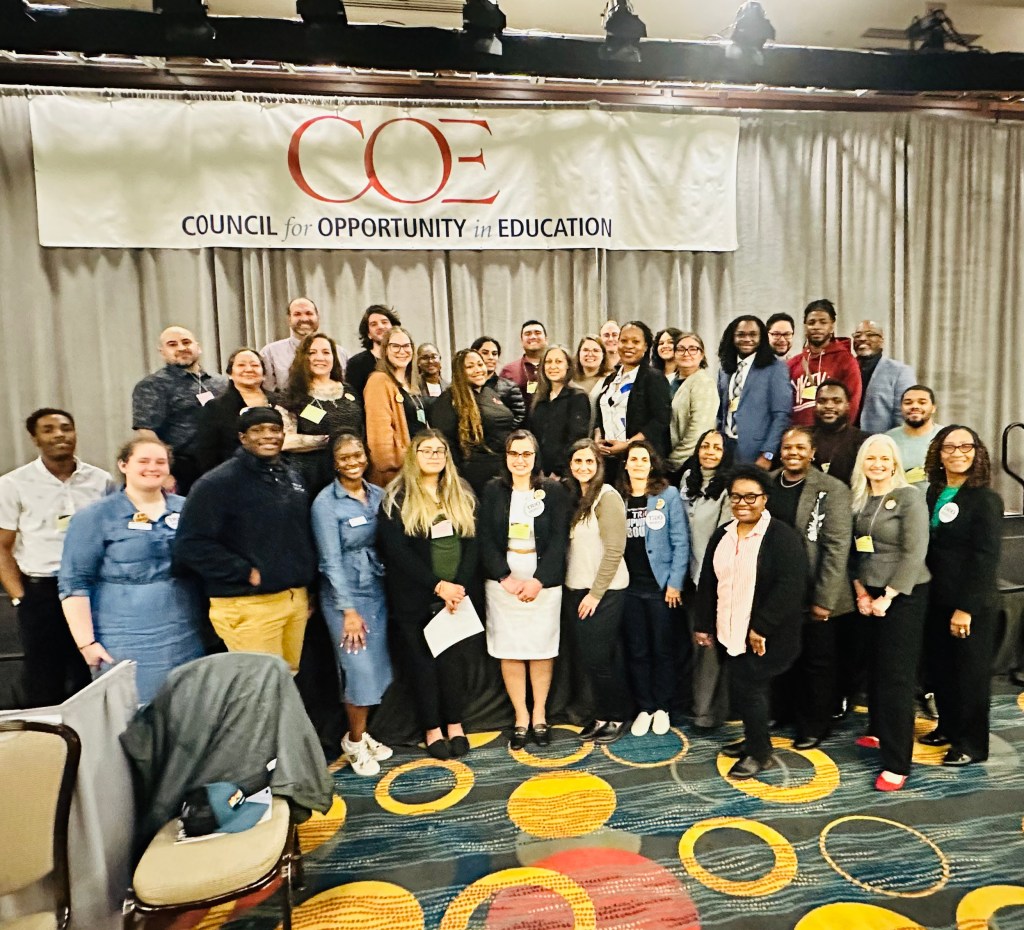
From Sunday, March 16th, through Thursday, March 20th, I was in Washington, D.C., attending the Council for Opportunity in Education (COE) Policy Seminar with two MSU colleagues, advocating for continued federal support of TRIO programs. TRIO, which falls under the Department of Education’s Office of Postsecondary Education, serves first-generation, low-income students, students with disabilities, and veterans—populations that are often left behind in our increasingly inequitable higher education system. While sharing all of the details of TRIO programs is beyond the scope of this post, more information can be found on the COE Website.
As I reflect on my time in D.C., it was impossible to ignore the troubling context in which this advocacy was taking place — just one week prior, over 1,300 Department of Ed employees were fired. Shortly after I arrived home on Thursday, March 20th, President Trump signed an executive order directing Secretary McMahon to begin dismantling the Department of Education—an institution that oversees many programs, including Federal Student Aid and TRIO programs designed to increase access to higher education. In this blog post, I reflect on the convergence of these events underscored the urgency of protecting TRIO and reframing higher education as a public good.
Advocating for TRIO – Lessons from the COE Policy Seminar

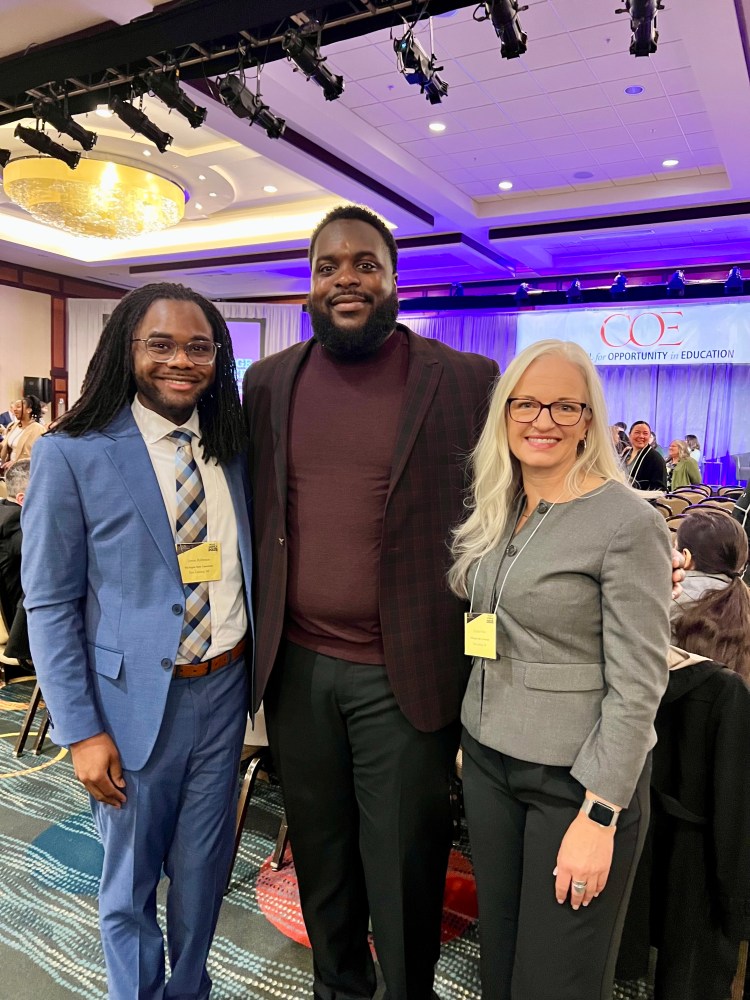
Reflecting on my time in Washington, D.C., the thing that struck me most was the power of collective advocacy and personal storytelling in shaping policy. The seminar focused on skill building, leadership, talking points, and relationship building for advocacy for federal TRIO funding. I didn’t know what, exactly, to expect as I travelled to D.C. with two staff members from MSU (Jieron Robinson — Director of TRIO Student Support Services (SSS), and Jimmy Hutchful — Academic Advisor in TRIO SSS).
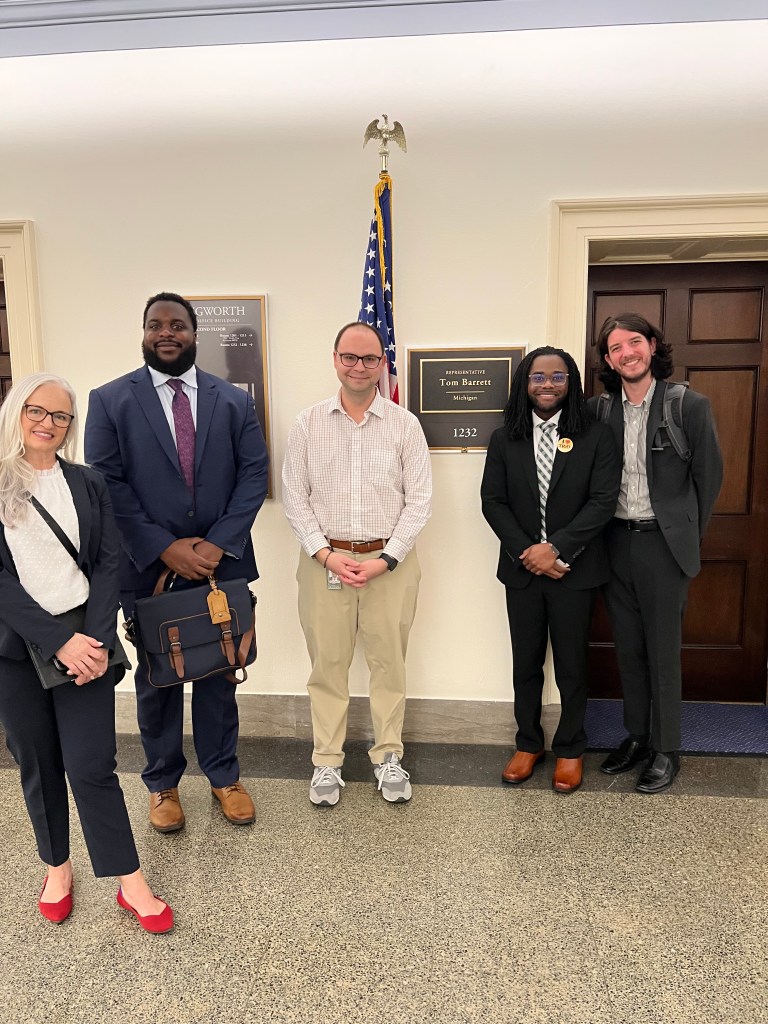
I knew we would have the opportunity to meet with Congressman Tom Barrett (R-MI-07), to highlight the importance of TRIO at Michigan State University and across the country. Our meeting ended up being with a staffer from the office of the first-term conservative Republican who holds the seat previously occupied by Elissa Slotkin, who is now one of Michigan’s two democratic U.S. Senators. Knowing the political landscape had shifted, I approached the meeting with a mix of apprehension and curiosity, eager to understand how best to communicate the impact of TRIO in a way that would resonate across ideological lines.
Before I go on, I think it’s important to note the funding structure of TRIO. TRIO is funded through House appropriations process and TRIO’s existence as a federal program (since 1964) predates the current Department of Education (est. in 1979). With efforts to dismantle the Department of Education already underway, I was (and remain) concerned about the potential consequences for TRIO programs. Although TRIO doesn’t explicitly fall under the current DEI debate, its support for marginalized communities—such as BIPOC students, rural populations, and other underserved communities—suggests that policy shifts could disproportionately harm these constituencies. TRIO’s work to support first-generation, low-income students and veterans should remain a bipartisan priority, but we must remain vigilant and vocal.
One positive aspect is that the TRIO Caucus is bipartisan and bicameral, with over 115 active members. This broad support serves as a reminder that investment in student success transcends party lines. The continued bipartisan support for TRIO programs demonstrates that fostering equitable access to higher education is a shared commitment across Congress.
This was my first time engaging in federal advocacy, though my connection to TRIO dates back to 2006-2008, when I worked at the University of Arizona. The TRIO SSS office, next door to the Office of Multicultural Affairs, showed me firsthand how TRIO programs contribute to student success. Now, as the Director of Pathways Persistence Programs at MSU—with TRIO SSS as one of the programs in my portfolio—I have a renewed appreciation for the need for sustained advocacy to ensure TRIO’s future. TRIO WORKS—and our advocacy ensures it continues to do so for generations to come.
One key takeaway from the experience was that, despite differing political ideologies, there is shared ground when discussing student success, economic mobility, and workforce development. TRIO aligns with these priorities, and framing advocacy around common goals helps bridge partisan divides. The staffer we met with was actually really receptive to our stories and data, acknowledging TRIO’s role in supporting student persistence and graduation–particularly for first-generation college students.
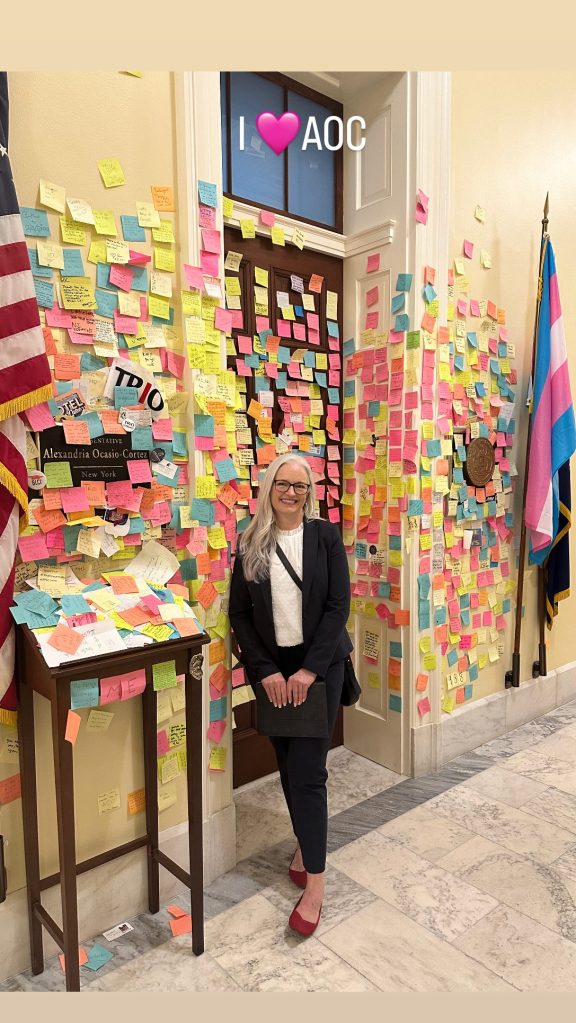
Another lesson was the power of storytelling in advocacy. While we had compelling statistics on TRIO’s success rates, it was the personal stories throughout the Policy Seminar—both from students and educators—that truly captured attention. A well-prepared message, delivered with authenticity and passion, can leave a meaningful impression, even in a brief meeting.
As an aside: I also observed a gap in collaboration between Student Affairs and TRIO programs. While TRIO initiatives support diverse student populations, including pre-college programs like Upward Bound and Talent Search, there is often limited engagement between TRIO and Student Affairs. Strengthening this partnership could significantly enhance our collective impact on student success.
My Action Steps:
- Continue to Educate Myself and Others – Learn about TRIO programs, their impact, and their funding mechanisms. Share this knowledge within my institution and more broadly across student affairs.
- Engage in Advocacy Year-Round – Contact my representative (Tom Barrett) by phone and email, attend any town halls, and use my voice to advocate for continued TRIO funding.
- Strengthen Partnerships Across Academic & Student Affairs – Given the gap I observed, I want to share more about TRIO with my colleagues in Student Affairs and in associations like ACPA. We can and should collaborate more intentionally to support student success.
- Empower Students to Tell Their Stories – I commit to working with students and supporting their travel to next year’s policy seminar to share their TRIO experiences with legislators and the public to amplify their impact.
Higher Education as a Public Good
Beyond the immediate policy concerns, this experience also reinforced my belief that higher education should be understood as a public good rather than solely an individual benefit. Too often, discussions about college focus on personal financial gain—how much more a graduate will earn over their lifetime (an additional $1M!!)—rather than the broader societal benefits of an educated population. When I visit Europe with the LCTE program, I am frequently asked why college is so expensive in the U.S. The reality is that we have lost sight of education as a collective investment in democracy and social equity.
If we in the U.S. truly believed in higher education as a public good, a greater percentage of our taxes would support institutions of higher learning, reducing the burden on individuals. Instead, we have accepted a narrative that places the financial responsibility on students, reinforcing the myth of meritocracy while exacerbating inequality. The dramatic rise in tuition and student loan debt is a direct consequence of this shift in perspective, and reversing this trend requires reframing the conversation around higher education as a societal imperative rather than an individual transaction.

A well-educated society benefits everyone—it leads to a stronger economy, increased civic participation, and more informed decision-making. When access to education is limited by financial barriers, we create a system that privileges those with existing wealth while leaving behind countless talented individuals who could contribute meaningfully to society if given the opportunity.
My Action Steps:
- Challenge the Narrative – Speak out against the idea that college is purely an individual investment and advocate for higher education as a public good.
- Support Policy Changes – Encourage policies that increase public funding for higher education and reduce student loan debt.
- Engage in Community Discussions – Raise awareness in my local and professional communities about the importance of accessible education.
- Vote with Education in Mind – Support candidates and legislation that prioritize affordable and equitable access to higher education.
Reclaiming the idea of education as a public good is not just about funding—it’s about reaffirming our collective commitment to a more just and equitable society. It’s time we shift the conversation and take action to ensure that higher education serves all, not just those who can afford it.
ON A PERSONAL NOTE: I’m grateful I had the opportunity to reconnect with several friends while I was in D.C.
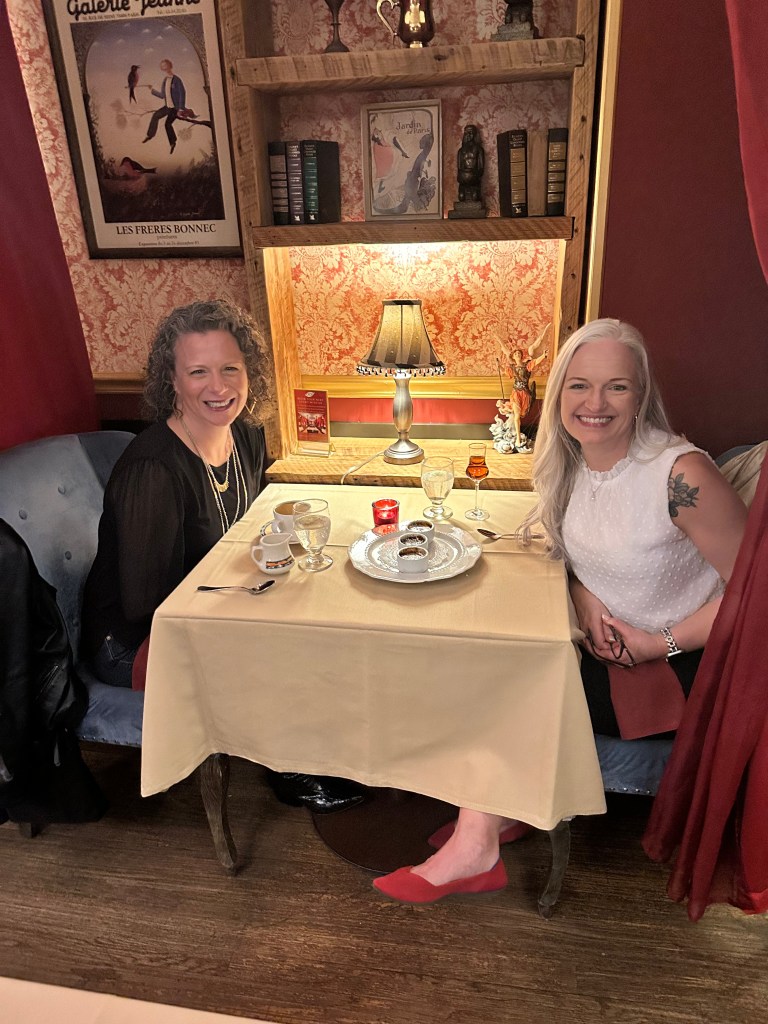
Jennifer Keup and I had a fabulous French dinner the first night I arrived. It was fantastic catching up and hearing about her new(ish) role at APLU. The last time we saw each other was three years ago and it felt like it was yesterday.
Second, it was such a delightful surprise running into Lucia Delgado from Colorado State University at the Policy Seminar. I first met Lucia in 1996, when she was a first-year SAHE student and the hall director of Allison Hall while I was the assistant hall director during my senior year of undergrad. Lucia now directs the Access Center (which has Upward Bound) at CSU.


Third, I’m grateful I got to share a meal with Maren Nicolaysen, a 2024 MSU alum, former WoCo President, and W*SS staff member who is now in graduate school at George Washington.
It’s always special to reconnect with those who have made a lasting impact on your life!
 Heather Shea, Ph.D.
Leave a comment